Saturday, 25 February 2017

Feminism, socialism,anarchism

Feminism

The nineteenth century saw the advancement of political rights for men but the emancipation of women was hampered by the doctrine of separate spheres and by the double standard of sexual morality. This was attacked in John Stuart Mill’s The Subjection of Women (1869), the key feminist text of the nineteenth century.

Mill was a Liberal, who propounded an individualistic concept of feminism. In 1879 the German socialist leader, August Bebel published Woman and Socialism, which set out a utopian view of a future classless society in which 'bourgeois' marriage and family life would no longer exist. This embarrassed some of his colleagues.

By 1870 both France and Germany had universal male suffrage. This was introduced in Austria in 1907. In Italy in 1912 a law was introduced to include all literate men of twenty-one or older, or who had served in the armed forces. These advances made women’s exclusion from the franchise all the more striking. 


Hubertine Auclert (1848-1914)
Public Domain

The movement for women’s suffrage was strongest in Britain. It was more difficult in France because of the combined opposition of Republicans and conservatives. Nevertheless a female suffrage movement emerged in 1876. In 1880 its leading figure Hubertine Auclert launched a tax revolt, arguing that without representation women should not be subjected to taxation. 

In February 1881 she launched a monthly periodical, La Citoyenne, arguing for women’s enfranchisement. In early 1885 she and her supporters held a shadow election in which fifteen women stood, though they did not gain admission to the Assembly. In 1904 she led a feminist demonstration in Paris in which she tore up a copy of the Code Napoléon. From a balcony she launched balloons on which were written the words: 
‘The Code crushes women: it dishonours the Republic.’ 
In 1908 she invaded the Chamber of Deputies with twenty followers and threw leaflets at the politicians. In the same year she and her companion invaded a polling booth and overturned ballot boxes. But the movement was weak compared with its British counterpart. A rally held early in July 1914 attracted only 6,000 people.

Saturday, 18 February 2017

Religion and secularisation

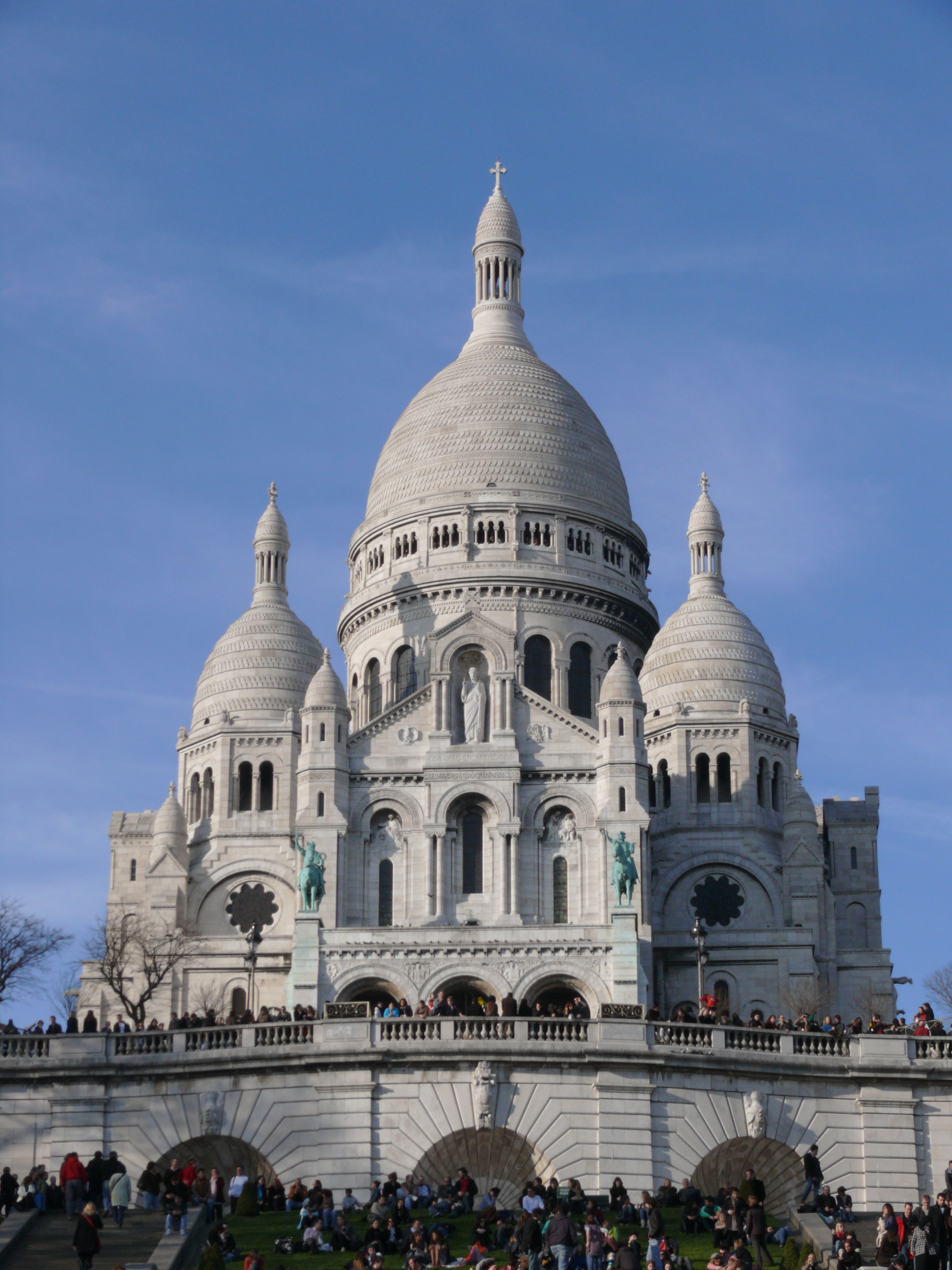
The Church of Sacré Cour, 
Montmartre


Religion under threat?

Historians and sociologists have been interested in the phenomenon of ‘secularisation’, which had usually been linked with ‘modernisation’. The nineteenth century saw a continuous conflict (and sometimes attempts at reconciliation) between the forces of religion and those of ‘modernity’. Conflicts arose when the state began to assume the functions that had traditionally belonged to the Church over matters like marriage and education. As the Church lost its monopoly, the working classes seemed to be increasingly indifferent to religion.


Many saw the findings of science and the growth of biblical criticism as attacks on religion. Charles Darwin (1809-82)  argued that humans and apes shared a common ancestor. The German theologian David Strauss (1808-74) scandalised orthodox Christians with his his Life of Jesus Critically Examined (1835). He argued that the New Testament should be read as any other historical text rather than as the divinely inspired word of God.

But it can also be argued that Europe was still fundamentally Christian. For people such as the Irish, the Poles, and the Russians, religion was tied up with national identity. Christian missionary work expanded in Asia and Africa. Popular religious movements often caused problems for the authorities.


Pius IX

The papacy of Pius IX (1846-78) saw powerful counter-blasts to the secularising trends of the age. In 1854 he proclaimed the doctrine of the Immaculate Conception of the Virgin Mary.  In 1864 he issued the Syllabus Errorumwhich condemned most trends in the modern world and declared it a heresy that ‘the Roman pontiff can and ought to reconcile and harmonise himself with progress, with liberalism and with modern civilisation’.  Napoleon III responded by banning it in France. 


Pius IX ('Pio Nono')
Public Domain

The pope was deeply alarmed by the unification of Italy in 1861. Most of the Papal States, the territory in central Italy that had historically been part of the Holy See, had been annexed, leaving Rome itself dangerously exposed. Only a French garrison stood between Rome and the Italian army. He issued an interdict forbidding Italian Catholics to vote or to stand in elections. The Italian state responded in 1867 with the expropriation of church land, the closure of religious orders, a ban on pilgrimages, civil marriage and the extension of equal political and civil rights to non-Catholics. 


The First Vatican Council, 1870
On 18 July it proclaimed the doctrine of papal infallibility
Public Domain

In the summer of 1868 Pius summoned the Vatican Council, the first General Council of the Church for over three hundred years. Over 700 bishops convened at St Peter’s on 8 December 1869. In May 1870 the Council promulgated a constitution containing fundamental statements of faith. A separate constitution setting out the doctrine of papal infallibility in matters of faith and morals, was voted through on 18 July, though a minority of 150 refused to assent to the doctrine regarding it as either inopportune or untrue. 

Saturday, 28 January 2017

Russia: autocracy, war, and terrorism


The extent of the country 

At the beginning of the nineteenth century Russia was geographically the world’s most extensive country and its empire was expanding. From 1809 it controlled Finland and in 1815 the Grand Duchy of Warsaw was subsumed into Russia. In 1800 Georgia was annexed. In 1859 the rest of the Caucasus was conquered and the Chechen hero Imam Shamil captured. In 1860 the Amur and Maritime provinces were acquired from China and Turkestan from Persia in 1875. Turkmenistan was annexed in 1881. The Pacific port of Vladivostok was founded in 1860. The only territory lost was Alaska, which was sold to the United States in 1867 for $8 million.


The Russian Empire, 1914

Saturday, 21 January 2017

Books on the period: update

The New York Times has an interesting review of the latest book on nineteenth-century European history - Richard Evans' The Pursuit of Power. The review gives a useful oversight of the main themes of the period. There is another very positive review in the Irish Examiner.

Evans' approach is thematic and this might not suit readers who are relatively new two the period. Two more conventional histories are Robert Gildea, Barricades and Borders: Europe 1800-1914, 3rd edn. (Oxford, 2003) and Michael Rapport, Nineteenth-Century Europe (Palgrave, 2005). 

Austria-Hungary

Emperor Franz Joseph
photographed, 1910

Before 1867 

In 1806 the Holy Roman Empire was brought to an end following Napoleon’s victories over the Austrians. The last of the Holy Roman Emperors, Francis II, was now Francis I of Austria. After the fall of Napoleon (1814-15), Austria became once more the leader of the German states but following the Austro-Prussian War of 1866 she was expelled from the German Confederation. In the same year she lost her remaining Italian territories when Venetia became part of the Kingdom of Italy. It was an alarming picture of decline from great power status.


The Ausgleich 

Austria’s defeat at the hands of Prussia caused Emperor Franz Joseph to reorient his policy toward the east and to consolidate his multi-national empire. Austrian liberals, too realised that the dream of Großdeutschland. was over. Even before the war the Hungarians had been restive; now they had their opportunity.  In May and June 1867 the Ausgleich (‘Compromise’) was ratified by the Austrian and Hungarian Parliaments. This brought into being the new state of Austria-Hungary, also known as the Dual Monarchy. The other peoples of the Empire were never consulted.

Saturday, 14 January 2017

France: the Third Republic


The Republic proclaimed

When the news of the French surrender at Sedan reached Paris on September 4, crowds filled the streets and demanded the proclamation of a republic. The imperial officials put up no serious resistance; the Revolution of September 4 was the most bloodless in French history. 


The siege of Paris

A provisional Government of National Defence was set up. It refused to accept the surrender terms and vowed to continue the war against the invaders. The new government's most charismatic member was the new Minister of the Interior, Léon Gambetta hero of the radical republicans. He doubled the size of the National Guard bringing its numbers up to 360,000 men (virtually the whole male able-bodied population of Paris). However by 23 September the Prussian forces had surrounded Paris, having already occupied all of France north and east of Orléans. The new government was deprived of its contact with the rest of the country. On 7 October Gambetta left the city by balloon to join several members of the government at Tours, where he assumed the functions of Minister of War as well as Minister of the Interior. During the next four months, Gambetta's makeshift armies fought a series of indecisive battles with the Prussians in the Loire valley and eastern France. These battles took the Prussians by surprise and greatly enhanced the prestige of the republicans, but the French forces were no match for Moltke’s army and the delegation at Tours was forced to withdraw to Bordeaux. 

Resistance was now concentrated in Paris where the National Guard manned the defences of the city. But the Prussians had no intention of taking Paris by storm when it was easier to starve the city. This was the beginning of a humanitarian catastrophe. Soon the Parisians were eating the animals from the zoo and cutting down the trees in the Champs Élysées for firewood. 


Christmas menu, of zoo animals
but also fine wine!
Public domain

On 5 January in the middle of a terrible winter, the Prussians began to bombard Paris. By this time left-wing leaders were accusing the government of treachery. While still at war with the Prussians, the Parisians were beginning to fight each other. 

Monday, 2 January 2017

The German Empire

The Proclamation of the German Empire
Public Domain


New Germany, new Europe

The German Empire (Reich) was proclaimed in the Hall of Mirrors, Versailles, on 18 February 1871, with Wilhelm I, the King of Prussia, as its Emperor (Kaiser) and Otto von Bismarck as its Chancellor.


Bismarck, Prime Minister of Prussia
and Chancellor of German
Public Domain

The Kingdom of Prussia had been transformed into the German Empire through three wars: against Denmark, Austria, and France. Contemporaries had no doubt that a new Europe, dominated by Germany, had come into being. The British politician, Benjamin Disraeli wrote: 
‘The war represents the German revolution, a greater political event than the French. There is not a single diplomatic tradition that has not been swept away.’
Not all Germans were happy with this. Wilhelm I had only reluctantly assumed the title of Emperor (Kaiser). His liberally-minded son, Crown Prince Friedrich, had grave misgivings.
‘We are no longer looked upon as the innocent sufferers of wrong, but rather as the arrogant victors…Bismarck has made us great and powerful, but he has robbed us of our friends, the sympathies of the world, and – our conscience.’
The German Empire, 1871-1918


The constitution of the Empire

The constitution of the Empire came into being on 16 April 1871. It was a federal system, though in practice it was dominated by Prussia, which contained sixty per cent of the population of Germany. However, larger states such as Bavaria and Saxony remained separate kingdoms with their own governments and military forces.